
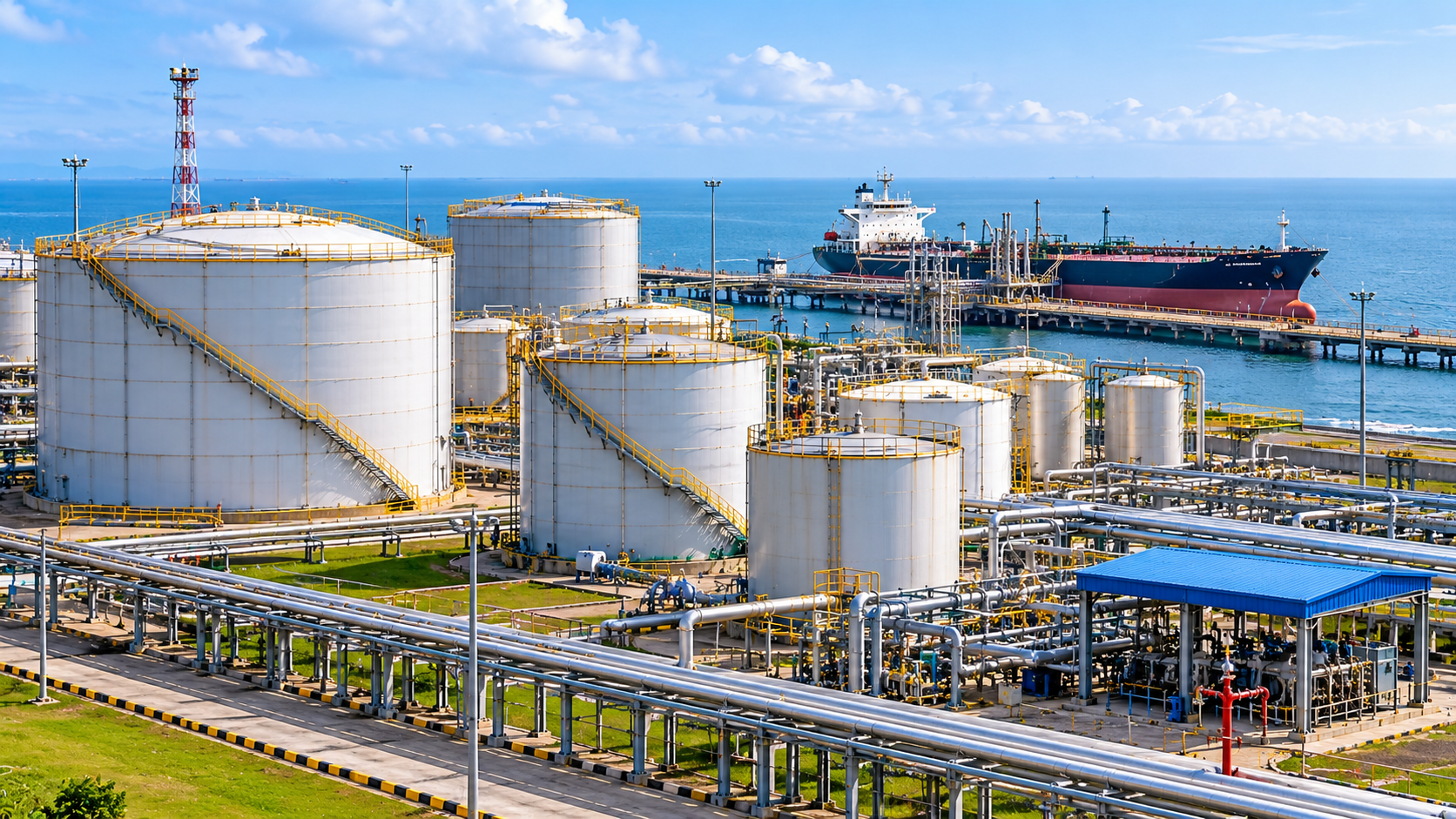
Oil Storage Terminal Capacity and the Balance Between Supply and Demand
Oil storage terminals play an important role in the petroleum supply chain by providing facilities for receiving, storing, and distributing crude oil and refined petroleum products. They help ensure that petroleum products remain available to meet market demand, even when supply and consumption do not occur at the same rate.
However, managing storage capacity can be challenging, particularly when there are fluctuations in supply, changes in market demand, port congestion, and delays in product deliveries.
Having sufficient storage capacity allows terminal operators and petroleum distributors to manage these challenges, maintain product availability, and avoid unnecessary operational costs.
This article explains the importance of oil storage terminal capacity and how it helps maintain a balance between supply and demand.
What is Oil Storage Terminal Capacity?
Oil storage terminal capacity refers to the total volume of crude oil or petroleum products that a terminal can accommodate within its storage facilities.
These terminals may receive products through marine tankers, pipelines, barges, and road tankers before storing and distributing them to refineries, depots, industrial facilities, and other customers.
Storage capacity is an important consideration when planning petroleum supply operations because it determines how much product can be received, stored, and made available for future distribution.
It is also important to distinguish between total tank capacity and usable working capacity, as some tank volume must remain unavailable for normal withdrawal and safe operations.
Why is Storage Capacity Important in Balancing Supply and Demand?
The demand for petroleum products does not always match the rate at which products are supplied to the market.
For example, a terminal may receive a large shipment of diesel from an import vessel while local demand remains relatively low. In this situation, available storage capacity allows the terminal to hold the product until market demand increases.
Similarly, when demand rises unexpectedly or supply deliveries are delayed, stored inventory can help maintain distribution and prevent shortages.
Oil storage terminals therefore provide flexibility within the petroleum supply chain by helping to:
- Maintain adequate petroleum product inventory.
- Manage fluctuations in supply and market demand.
- Prevent product shortages during supply disruptions.
- Accommodate large vessel and pipeline deliveries.
- Support continuous distribution to customers.
- Provide temporary storage during periods of market oversupply.
Factors Affecting Oil Storage Terminal Capacity Requirements
Several factors influence the amount of storage capacity required by an oil terminal.
1. Market Demand
The level of petroleum consumption within a particular market influences the amount of storage required.
Areas with high demand for PMS, AGO, and other petroleum products may require larger storage facilities to support regular distribution and maintain adequate inventory levels.
2. Supply Availability
The reliability and frequency of product deliveries also affect storage requirements.
Terminals that receive products through imported cargoes may require sufficient capacity to accommodate large shipments and maintain inventory between vessel arrivals.
3. Seasonal Demand Variations
Petroleum consumption can change during certain periods due to weather conditions, agricultural activities, transportation requirements, and industrial demand.
Storage capacity helps terminal operators prepare for these fluctuations by maintaining sufficient inventory ahead of periods of increased consumption.
4. Port and Transportation Infrastructure
The location of an oil storage terminal and its connection to ports, pipelines, and road networks can influence its storage requirements.
Terminals located near major ports may receive large marine cargoes, while inland facilities may depend more heavily on pipeline and road transportation.
5. Supply Disruptions
Unexpected events such as refinery shutdowns, vessel delays, pipeline failures, and transportation interruptions can affect petroleum supply.
Maintaining adequate storage capacity provides an additional buffer against these disruptions.
The Relationship Between Storage Capacity and Market Oversupply
During periods when petroleum supply exceeds market demand, oil storage terminals become particularly important.
When more products enter the market than consumers require, excess inventory must be stored until demand improves or additional distribution arrangements are made.
For example, an importer receiving several cargoes of AGO within a short period may need sufficient tank space to accommodate the incoming products while existing inventory is still available for distribution.
If storage capacity is inadequate, the importer may experience difficulties receiving new cargoes, leading to additional vessel waiting time, delivery delays, and increased operational expenses.
Adequate storage capacity therefore helps petroleum businesses manage periods of oversupply more efficiently.
How Oil Storage Terminals Help During Supply Shortages
Storage terminals are equally important when petroleum supply becomes limited.
When product deliveries are delayed or market demand increases unexpectedly, available inventory can be released to maintain supply to customers.
For instance, if a refinery experiences an unexpected shutdown, petroleum distributors may rely on existing terminal stocks to continue supplying filling stations, industrial customers, and other consumers.
This makes oil storage terminals an important part of supply security and petroleum distribution planning.
Strategies for Optimising Oil Storage Terminal Capacity
Effective storage management involves more than simply increasing the number or size of storage tanks. Terminal operators must ensure that available capacity is properly utilised.
Some important practices include:
- Demand Forecasting: Monitor market consumption patterns to determine the appropriate inventory levels required for different petroleum products.
- Inventory Monitoring: Maintain accurate records of product receipts, deliveries, and available tank capacity.
- Efficient Tank Allocation: Allocate storage tanks according to product specifications, compatibility, and expected delivery schedules.
- Regular Tank Maintenance: Inspect and maintain storage facilities to ensure that available capacity remains safe and operational.
- Supply Chain Coordination: Coordinate vessel arrivals, pipeline deliveries, and product distribution to avoid unnecessary congestion.
- Contingency Planning: Maintain suitable inventory buffers to manage unexpected supply interruptions and changes in market demand.
These measures can improve terminal efficiency, reduce unnecessary storage costs, and support reliable petroleum product distribution.
Conclusion
Oil storage terminal capacity is an essential component of effective petroleum supply chain management. It provides the flexibility required to manage differences between product supply and market demand while supporting continuous petroleum distribution.
During periods of oversupply, storage terminals provide space for excess inventory, while during supply shortages, existing stocks help maintain product availability.
By adopting proper inventory management practices, improving supply chain coordination, and maintaining adequate working storage capacity, terminal operators and petroleum distributors can reduce operational challenges and respond more effectively to changing market conditions.
Ultimately, the effective management of oil storage terminal capacity contributes to a more reliable, flexible, and efficient petroleum supply chain.