Petroleum Terminal Storage: How Tanks and Pipelines Work
Petroleum terminals play an important role in the oil and gas supply chain by providing facilities for receiving, storing, and distributing crude oil and refined petroleum products. These facilities depend on storage tanks and pipeline systems to ensure that petroleum products can be handled and transferred efficiently.
Storage tanks provide temporary holding facilities for large quantities of petroleum products, while pipelines connect different sections of the terminal and facilitate the movement of products between storage facilities, vessels, and distribution points.
Understanding how these two components work together is essential to effective petroleum terminal operations.
This article explains the basic functions of petroleum storage tanks and pipelines and how they support terminal operations.
What is Petroleum Terminal Storage?
Petroleum terminal storage refers to the facilities and equipment used to receive, store, and distribute petroleum products before they are delivered to customers or transported to other locations.
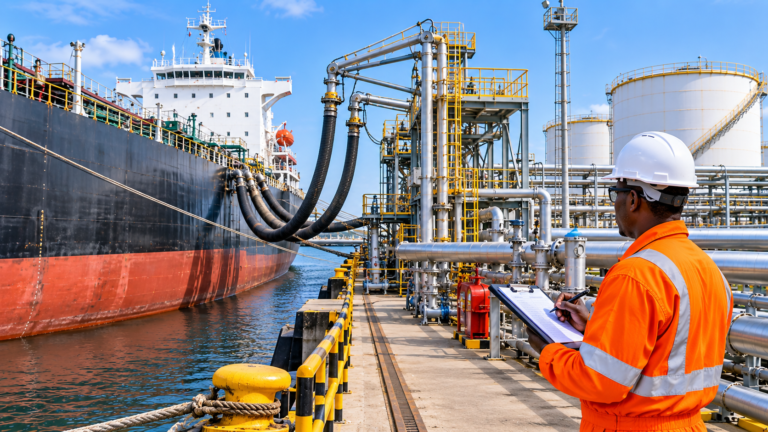
These terminals may receive products through marine tankers, pipelines, barges, and road tankers.
Common products handled at petroleum terminals include:
- Crude oil.
- Premium Motor Spirit (PMS) or gasoline.
- Automotive Gas Oil (AGO) or diesel.
- Kerosene.
- Aviation fuel.
- Fuel oil and other refined petroleum products.
The main objective is to maintain adequate product inventory while ensuring safe handling, storage, and distribution.
How Petroleum Storage Tanks Work
Storage tanks are among the most important components of a petroleum terminal. They are designed to hold large quantities of liquid petroleum products under controlled conditions.
Depending on the product and storage requirements, terminals may use different types of storage tanks.
1. Fixed Roof Tanks
Fixed roof tanks have a permanent roof attached to the tank structure. They are commonly used for storing products with relatively low vapour pressure, depending on the applicable design and regulatory requirements.
They may also be fitted with suitable ventilation and vapour control systems.
2. Floating Roof Tanks
Floating roof tanks have a roof that rests on the surface of the stored liquid and moves up or down as the product level changes.
Their design helps reduce the vapour space above the product and minimise evaporative losses.
They are commonly used for storing crude oil and certain volatile petroleum products.
3. Tank Gauging and Level Monitoring
Storage tanks are fitted with manual or automatic gauging systems to monitor product levels.
These systems help operators determine available storage capacity, monitor incoming deliveries, and prevent overfilling.
Accurate inventory monitoring is essential for maintaining efficient terminal operations.
How Pipeline Systems Work in Petroleum Terminals
Pipelines provide the connection required to transfer petroleum products between storage tanks and different transportation facilities.
They are designed to move products safely and efficiently through a network of pipes, pumps, valves, and other equipment.
The movement of petroleum products through a terminal pipeline generally involves the following stages:
1. Product Receipt
Petroleum products arrive at the terminal through marine vessels, external pipelines, or other transportation systems.
The products are transferred through designated pipelines into the appropriate storage tanks.
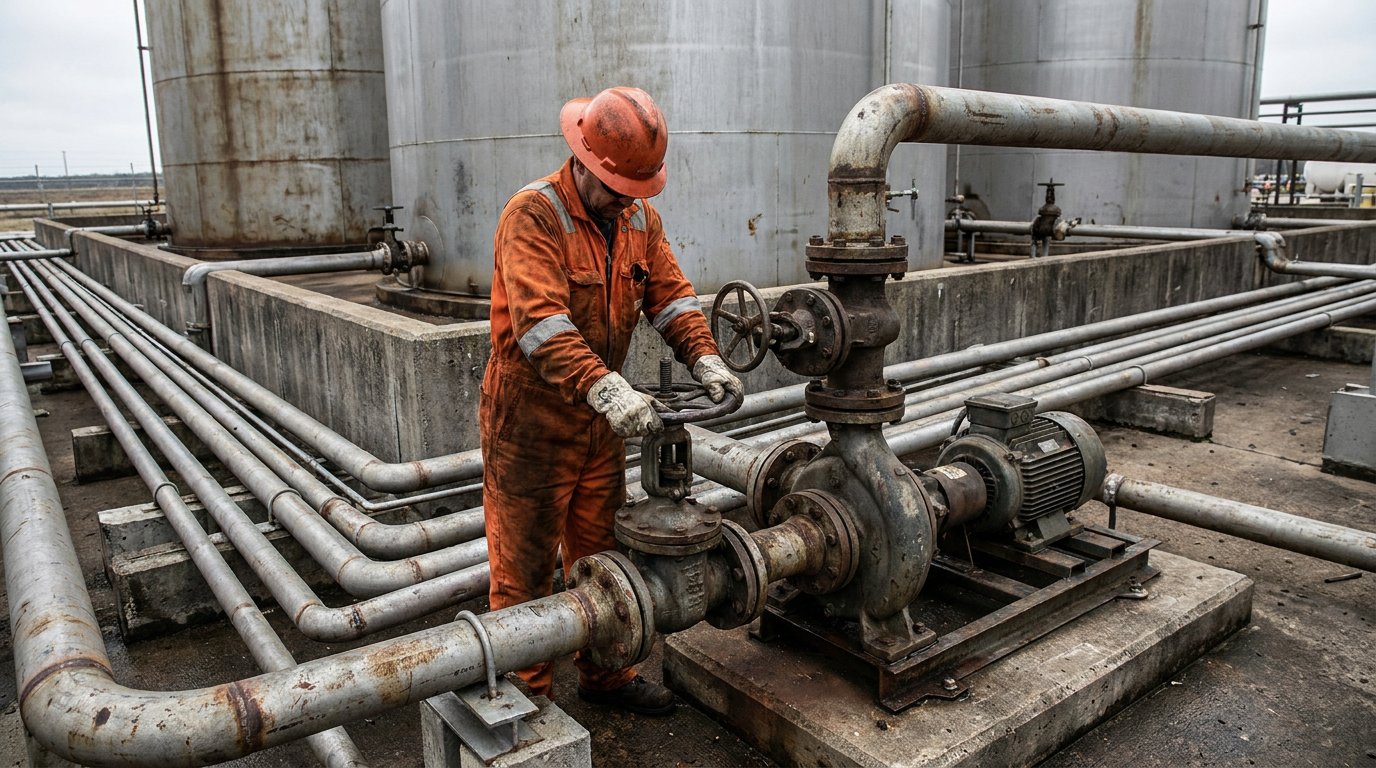
2. Pumping Operations
Pumps provide the pressure required to move petroleum products through the pipeline network.
The type and capacity of pumping equipment depend on the product being handled, the required flow rate, and the pipeline operating conditions.
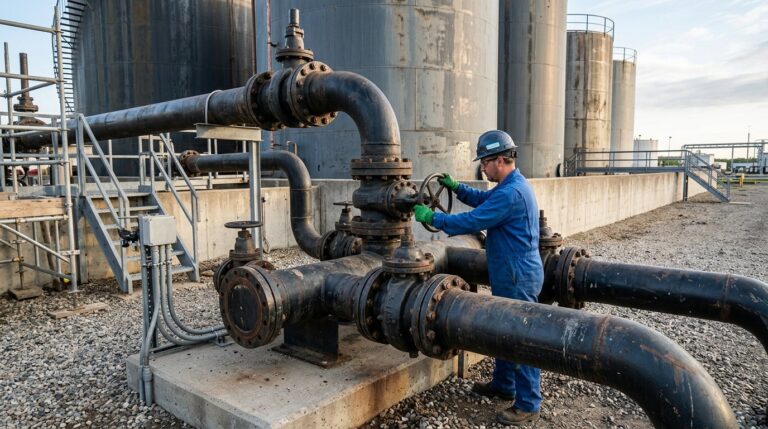
3. Valve and Flow Control
Valves are installed at strategic points within the pipeline system to control product movement.
They allow operators to direct products to specific storage tanks, isolate sections of pipelines, and manage transfer operations.
4. Product Transfer and Distribution
After storage, petroleum products can be transferred through pipelines to other terminals, distribution facilities, or loading points.
They may also be transferred into road tankers, rail tankers, or marine vessels for onward transportation.
How Storage Tanks and Pipelines Work Together
Storage tanks and pipelines operate as interconnected systems within a petroleum terminal.
Pipelines provide the movement of products, while storage tanks provide the capacity to hold products until they are required.
For example, when a marine tanker delivers a cargo of diesel to a terminal, the product is transferred through pipelines into designated storage tanks.
After the discharge operation, the diesel remains in storage until it is required by customers. When distribution is scheduled, pumps transfer the product through the terminal pipeline network to the appropriate loading facilities.
This coordinated arrangement allows terminals to receive large cargoes and distribute products according to market requirements.
Important Equipment Used in Petroleum Terminal Operations
Apart from storage tanks and pipelines, several other equipment and systems support petroleum terminal operations.
These include:
- Pumps: Used to move petroleum products through pipelines and between storage tanks.
- Valves: Control product flow and isolate pipeline sections when necessary.
- Flow Meters: Measure the quantity of petroleum products transferred during loading and unloading.
- Filters and Strainers: Help remove unwanted particles and contaminants from products.
- Loading Arms and Hoses: Connect terminal transfer systems to vessels and road tankers.
- Level Monitoring Systems: Monitor storage tank levels and support overfill prevention.
- Fire Protection Systems: Provide protection against fire hazards associated with petroleum storage and handling.
These systems must be properly maintained to ensure safe and reliable terminal operations.
Common Challenges in Tank and Pipeline Operations
Petroleum terminals can experience several operational challenges that affect product storage and transfer activities.
Some common examples include:
- Pipeline Leakage: Corrosion, mechanical damage, and equipment failure can result in product leaks.
- Pump Failure: Mechanical or electrical problems can interrupt product transfer operations.
- Tank Overfilling: Poor monitoring during product receipt can lead to spills and safety incidents.
- Product Contamination: Water, sediment, and inadequate handling practices can affect product quality.
- Pipeline Blockages: Deposits and other obstructions can restrict product movement.
- Equipment Maintenance: Inadequate inspection and maintenance can increase operational downtime.
Regular inspections, preventive maintenance, and effective operational monitoring are essential to addressing these challenges.
Best Practices for Efficient Petroleum Terminal Operations
To maintain efficient and reliable terminal operations, operators should adopt the following practices:
- Regular Tank Inspection: Inspect storage tanks for corrosion, leakage, structural damage, and other defects.
- Pipeline Maintenance: Conduct routine checks on pipelines, valves, pumps, and associated equipment.
- Accurate Inventory Monitoring: Use appropriate gauging systems to monitor product levels and available storage capacity.
- Product Quality Control: Carry out regular sampling and testing to identify possible contamination.
- Safety Management: Maintain suitable fire protection systems, emergency procedures, and personnel training.
- Operational Coordination: Coordinate product receipts, storage arrangements, and distribution schedules to minimise delays.
Conclusion
Petroleum storage tanks and pipeline systems are essential components of modern petroleum terminals. While tanks provide the storage capacity required to hold crude oil and refined petroleum products, pipelines ensure their efficient movement between vessels, storage facilities, and distribution points.
Both systems must operate together to maintain product quality, support efficient inventory management, and ensure reliable petroleum distribution.
By investing in suitable equipment, carrying out regular maintenance, and implementing effective operational procedures, terminal operators can minimise disruptions, improve safety, and achieve more efficient petroleum terminal operations.